




💧 Tiny Vinyl Liner Holes, Big Water Loss ⚠️ The Hidden Leak Problem Caused by Fire Ants 🐜
🔍 Why Vinyl Liner Leak Detection Matters Immediately
When you notice your pool water level dropping faster than usual, it’s easy to blame evaporation or the kids splashing too much. But sometimes, that slow and steady water loss points to something far smaller — a pinhole leak in your vinyl liner. Swimming pool leak detection for vinyl liner pinholes caused by fire ants can be crucial, as these insects are often the culprits. These tiny punctures might look harmless, but left untreated they can waste thousands of gallons of water, weaken your pool structure, and shorten the life of your liner dramatically.
⚠️ Tiny Holes, Big Consequences
Although these pinholes are small and may only contribute a drop or two here or there, enough pinholes and those drops can add up quickly — and before you know it, your pool can drain itself in no time.
Vinyl-lined pools are popular across the country for their smooth surfaces, affordability, and clean look. Unfortunately, that same flexible liner material can also be vulnerable to sharp debris, ground movement, and — surprisingly — insect activity. Fire ants, carpenter ants, and other burrowing pests are notorious for creating hidden pathways beneath pool walls, eventually chewing or pressing through the liner and causing micro-leaks that are nearly impossible to spot with the naked eye.
🐜 The Ant Problem You Can’t See Coming
Whether you own an in-ground or above-ground pool, those “mystery” water losses can sneak up on you fast. Understanding the real causes behind leaking pinholes in a vinyl liner can save you time, money, and frustration. In this guide, we’ll explore what causes those leaks, how to tell if ants or other pests are to blame, and how Aquatrace Swimming Pool Leak Detection professionals find and fix them the right way before bigger problems develop.
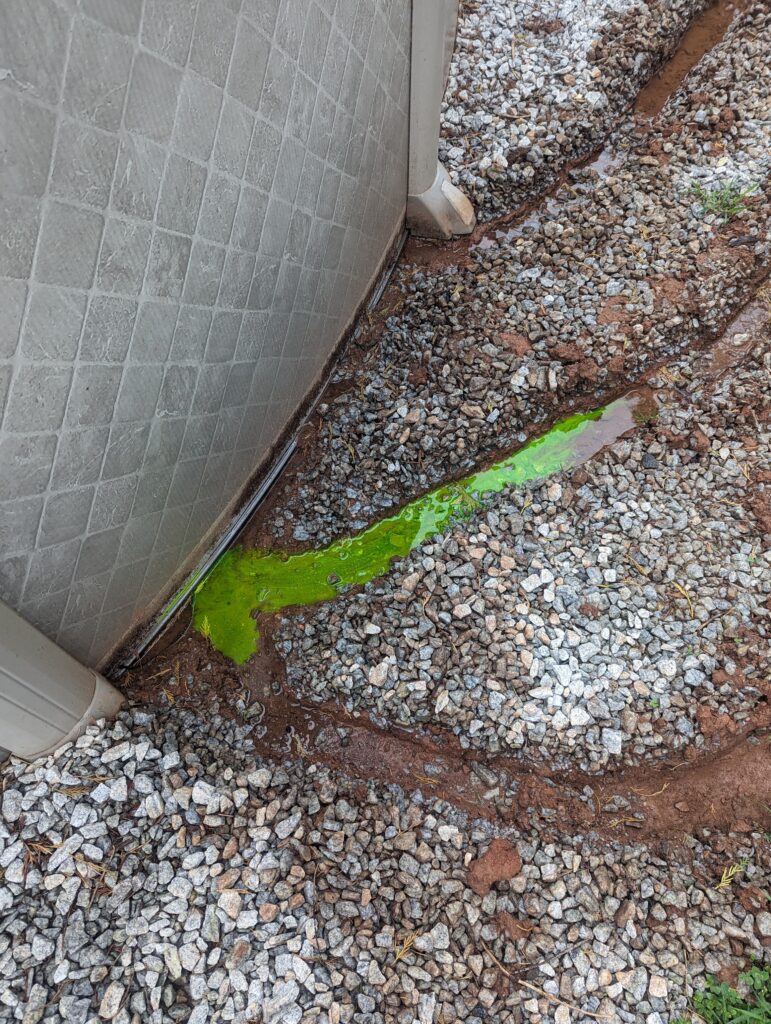
Why Vinyl Liners Develop Pinholes
🧪 Common Causes of Vinyl Liner Leak Damage
Vinyl pool liners may look strong and watertight, but they’re not invincible. Over time, several natural and environmental factors can weaken the material and cause small punctures or “pinholes” that lead to slow leaks. While these holes often start as barely visible spots, they can expand or multiply quickly once water pressure and movement begin working against the liner.
One of the most common causes is age. As a liner gets older, the vinyl loses its elasticity and becomes brittle, especially under constant sun exposure or from fluctuating water chemistry. When that flexibility fades, even a small sharp object — like a bit of gravel underfoot or a child’s pool toy — can pierce the surface.
Chemical imbalance is another frequent culprit. When pool water contains too much chlorine or improper pH levels, the vinyl begins to dry out and crack. Over-chlorination in particular can make the liner stiff, causing micro-tears that appear as tiny leaks around seams or steps.
⚙️ Physical Wear That Leads to Vinyl Liner Leak Damage
Then there’s debris and movement. Rocks, sticks, and sand trapped beneath the liner can slowly grind into the material from regular foot traffic or shifting ground. Even minor settling around an above-ground pool can create tension points that stress the liner and form new leaks.
Another easily overlooked cause is pool cleaning equipment with damaged edges. Scrub brushes, vacuum heads, and leaf rakes with cracked plastic or worn-down corners can act like razors against your liner’s surface. Over time, one rough cleaning session can create dozens of micro-scratches that eventually turn into pinholes. It’s important to inspect your cleaning tools regularly and replace any that show chips, warping, or exposed metal.
📎 Inspecting Your Pool Cleaning Equipment to Prevent Liner Leaks
Lastly, pests and insects — like fire ants, termites, and beetles — often burrow around the pool’s perimeter. Their underground tunnels can undermine soil stability and push against the liner from below, creating pressure points that eventually pop into pinholes.
Each of these factors alone might not cause major water loss, but combined they can add up fast. Once you start losing water from several pinholes at once, your pool’s water level can drop rapidly — sometimes inches in just a few days. That’s why identifying and addressing the source early is so important before small leaks turn into liner replacements.
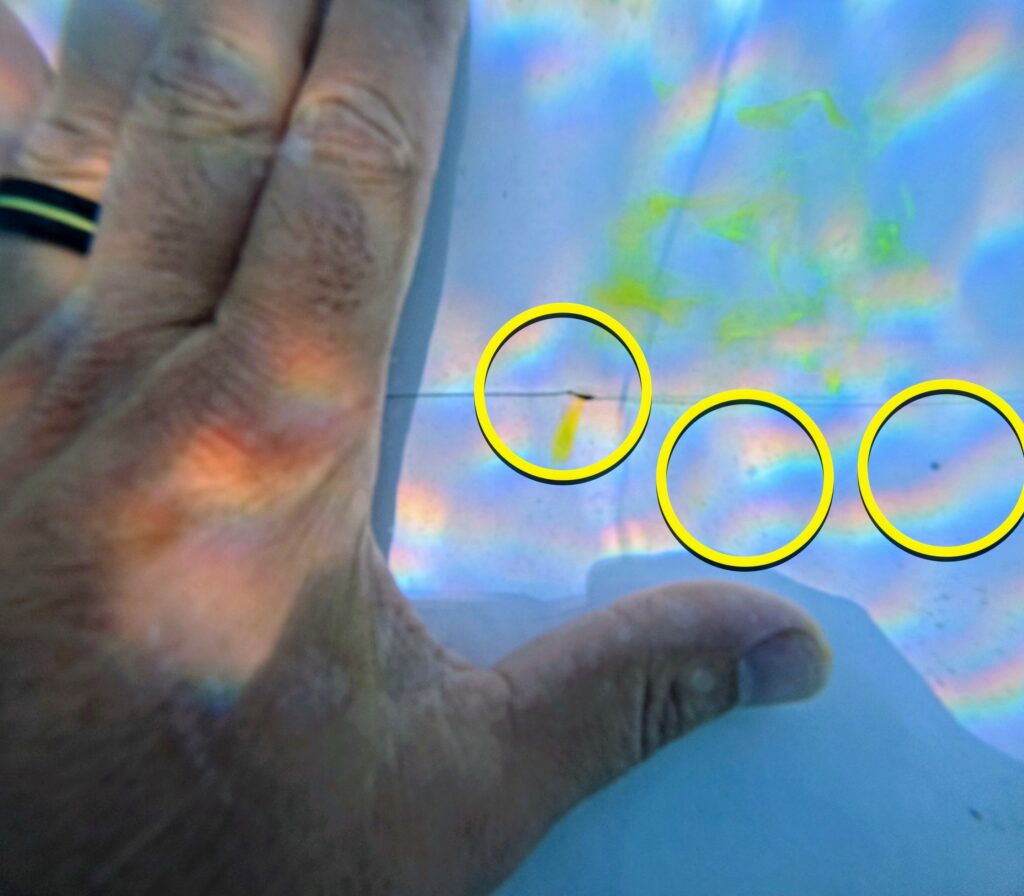
The Hidden Culprit — Fire Ants and Other Insects
🐜 How Insects Lead to Vinyl Liner Leak Damage
When most people think about pool leaks, they picture torn seams, loose fittings, or old liners — not insects. But for many above-ground and even in-ground vinyl liner pools, fire ants and other burrowing pests are a major hidden cause of pinhole leaks.
Fire ants thrive in warm, moist soil, and a pool area is prime real estate for them. The ground around your pool stays slightly damp from splashout and backwash, and the warmth radiating from the liner provides a perfect environment for their colonies. These ants often build nests near pool walls or under the bottom rail of above-ground pools, where the soil is protected and easy to tunnel through.
Over time, as they dig and expand their colonies, the ground beneath the pool shifts and settles. This movement alone can stress the liner, but it’s what comes next that really causes trouble — ants chewing or pressing through the liner. Vinyl is no match for a determined fire ant colony looking to expand its tunnels or regulate temperature inside the nest.
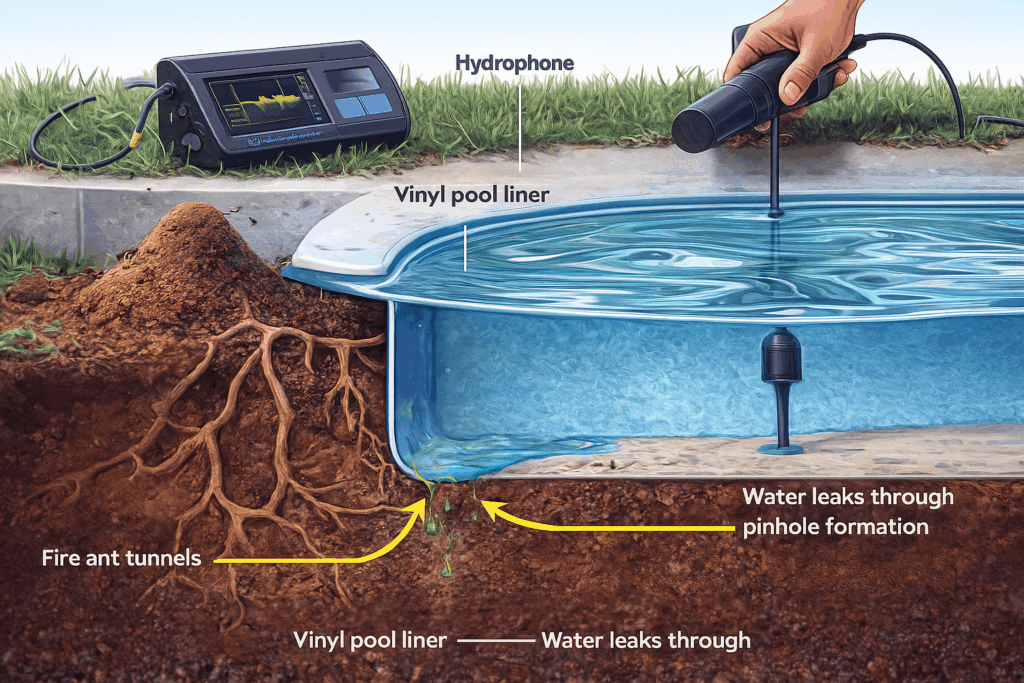
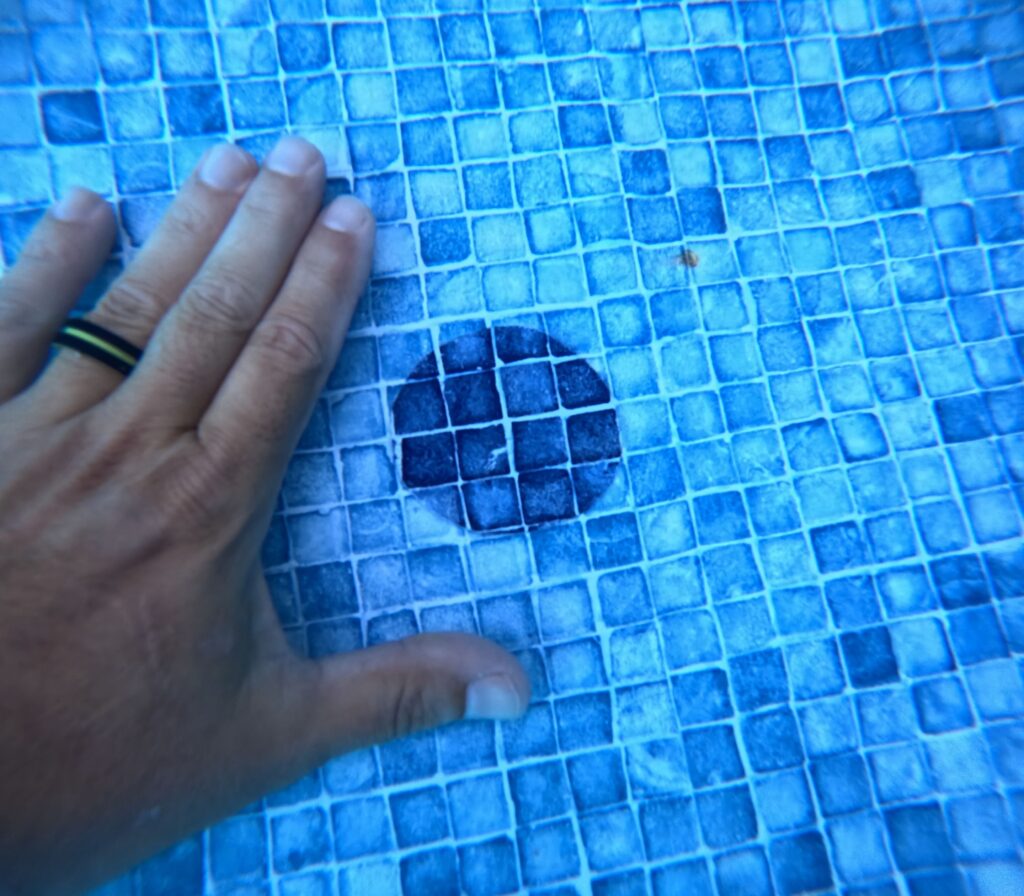
The result? Tiny perforations that appear randomly across the liner floor or lower wall, often too small to see without specialized detection equipment. You may notice soft, spongy areas underfoot or small air bubbles beneath the liner — both signs of soil movement or ant activity beneath the surface.
While fire ants are the most common culprits, they aren’t the only ones. Carpenter ants, termites, and even certain types of beetles can create underground networks that lead to similar damage. Once these pests compromise the liner, every bit of water pressure inside the pool works against those weak spots, turning small punctures into constant leaks.
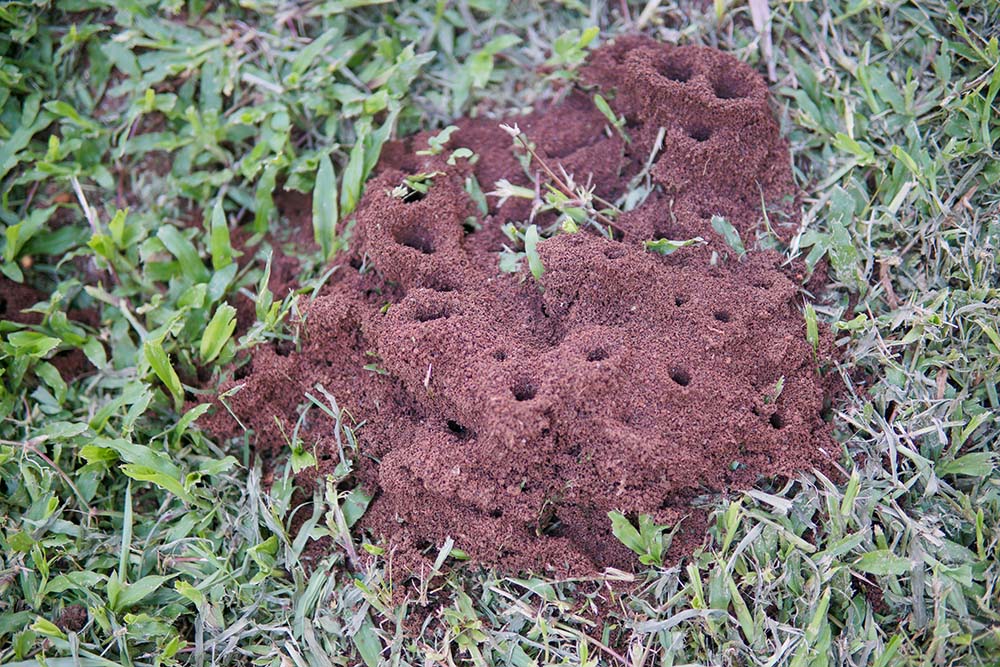
Why Fire Ants Target Pool Areas
🔥 Why Fire Ants Choose Pool Environments
Fire ants don’t just stumble across your pool — they actively seek it out. From a pest’s perspective, your pool area checks all the boxes: warmth, moisture, vibration, protection, and a water source. The soil surrounding the pool base stays consistently damp, which helps the colony regulate its temperature and humidity. That steady moisture level is ideal for nesting and maintaining the ants’ tunnel structure underground.
Another reason they love pool environments is the vibration from the filtration system. The constant hum of a pool pump or motor sends low-frequency vibrations through the ground. To ants, this acts as a beacon — they instinctively gravitate toward the vibration, mistaking it for a sign of warmth or another nesting colony. Once there, the soft, loose backfill soil used around most above-ground pools makes tunneling effortless.
💧 How Fire Ants Create Vinyl Liner Leak Damage
It’s also important to understand that fire ants don’t view your liner as food — nor do they gain any real benefit from the vinyl itself. To them, it’s simply a barrier standing between their colony and a steady water source. Once they detect moisture through the liner, they begin chewing or boring through the material to gain access. That’s why leaks from fire ant activity often appear as small, clean-edged holes — created purely as entry points for the moisture beneath your pool’s surface.
Add to that the protection of the pool’s perimeter — especially under concrete pads, vinyl skirts, or deck boards — and you’ve got the perfect shelter from rain and predators. Over time, the ants carve out massive underground chambers beneath or beside the pool wall. As those tunnels expand, the soil loses its ability to support the liner evenly, creating tiny pockets of air or sagging areas that stress the vinyl surface.
Even if they never chew directly through the liner, that constant soil movement can flex and stretch the material in small waves each time the pool is used. Eventually, those weak points turn into the infamous pinholes that leak a drop here, a drop there — until your pool’s water level begins dropping day after day.
Recognizing these early warning signs around your pool base can help prevent costly damage before it happens. The next time you spot a mound near your pool or notice uneven footing under the liner, it’s worth checking for fire ant tunnels before the problem literally eats away at your waterline.
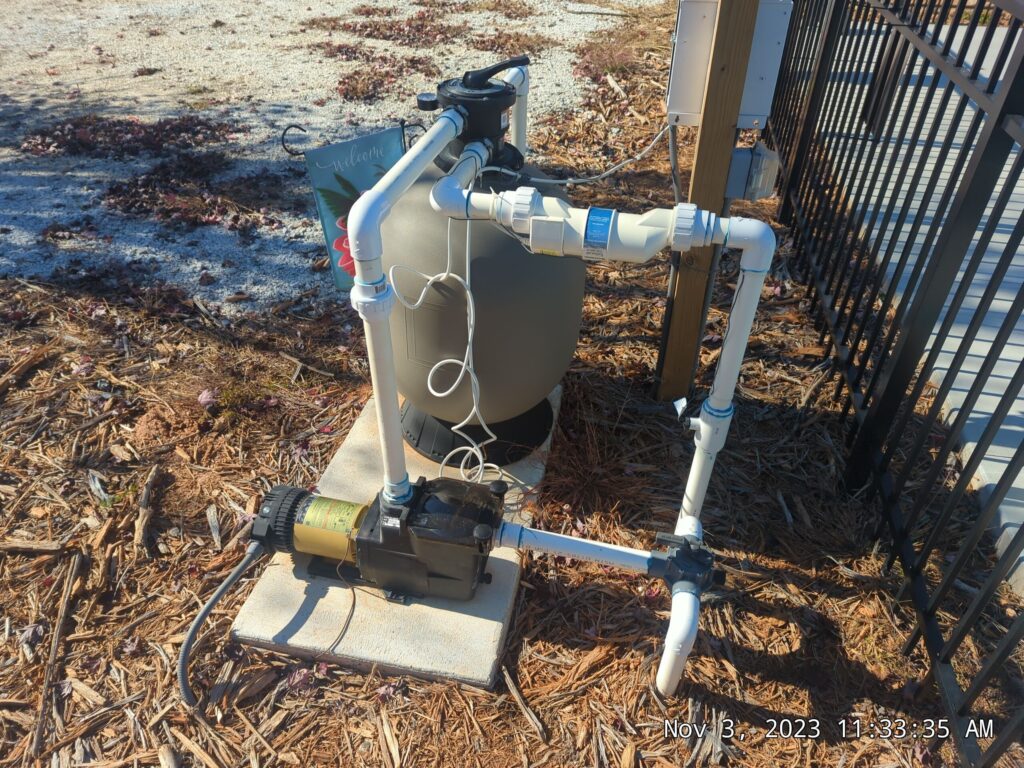
How Ants Create Damage You Can’t See
🐜 Hidden Liner Damage Below the Surface
What makes fire ant–related liner damage so frustrating is that most of it happens completely out of sight. Unlike tears, wrinkles, or visible punctures, the early stages of ant damage develop below the liner, where soil movement and tunneling slowly undermine the pool’s foundation.
As fire ants dig through the compacted soil beneath or alongside the pool, they create hollow chambers and tunnels that disturb the base material supporting the liner. Each time someone swims, vacuums, or even walks in the pool, the water’s movement flexes the liner against these uneven spots. Over time, that flexing causes stress points — especially in older vinyl — which eventually turn into pinholes or small cracks.
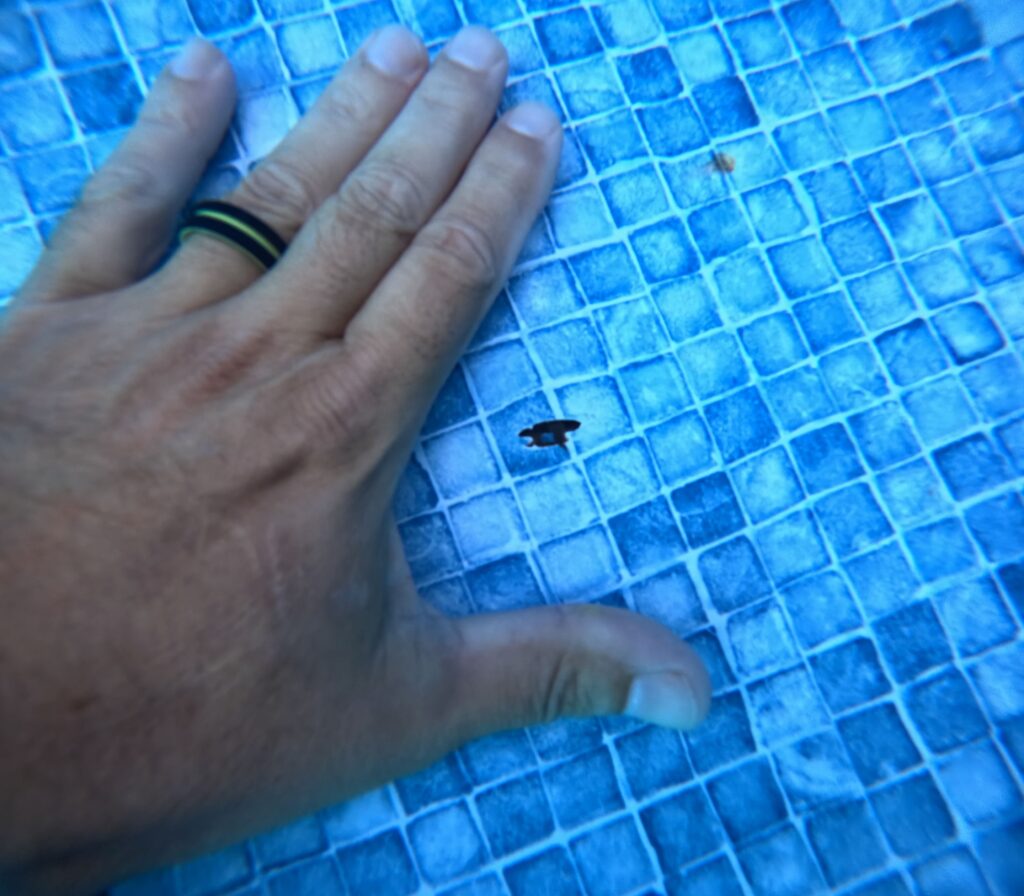
When the ants finally chew through, they’re not after the liner itself. They’re after the water. Once they detect dampness or condensation through the vinyl, the liner becomes an obstacle in the way of a steady moisture source. Fire ants will chew cleanly through the material to reach it, leaving tiny, almost perfectly round holes that often escape notice during a quick visual inspection.
💧 Why Vinyl Liner Leak Detection Is Critical
The real danger lies in how these pinholes multiply. One small colony can create dozens of entry points beneath a pool, each leaking a drop or two every few seconds. Combined, that’s enough to drain hundreds of gallons per day — even when you can’t spot a single wet spot outside the pool. Homeowners often assume it’s normal evaporation until the water level continues dropping well below the skimmer.
Signs of this type of damage can include:
- Soft, spongy spots underfoot inside the pool
- Air bubbles trapped beneath the liner
- Slow, steady water loss even when the weather is mild
- Ant mounds forming near or directly against the pool wall
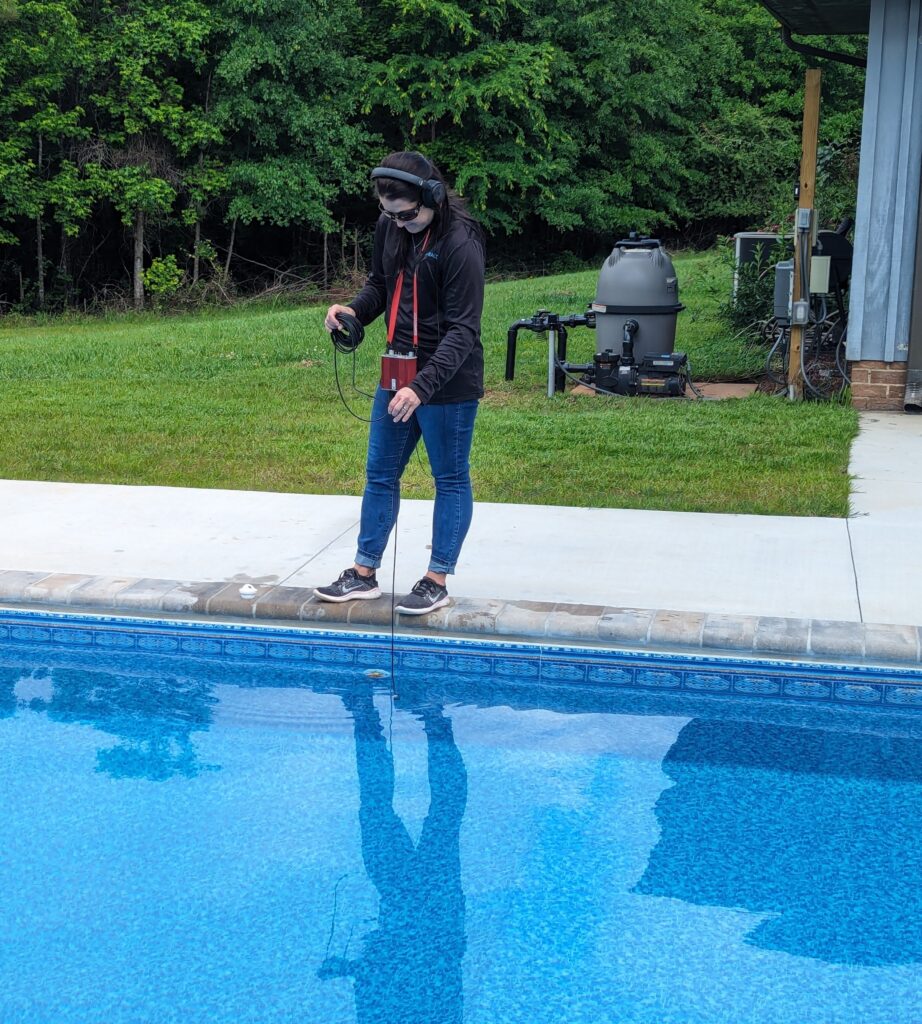
Once these symptoms appear, professional swimming pool leak detection becomes essential. Specialists like Aquatrace Swimming Pool Leak Detection use hydrophones, sonar listening devices, and electronic scan tests to pinpoint where underground tunnels have compromised the liner. That’s the only way to confirm the true source before patching or replacement begins.
🐜 Common Signs of Fire Ant or Insect-Related Liner Leaks
Because fire ant and insect damage usually happens out of sight, most pool owners don’t realize there’s a problem until they’ve already lost a significant amount of water. The signs are subtle at first, but once you know what to look for, they become easier to spot — and much faster to address before costly damage occurs.
💧 1. Slow, Unexplained Water Loss
If your pool water level seems to drop every day — even when temperatures are mild and there’s little evaporation — that’s your first warning sign. Tiny pinholes created by ants or insects can let out just a few drops per minute, but together they can drain hundreds of gallons in a matter of days. Homeowners often mistake this for natural water loss, but if your pool is losing more than ¼ inch per day, it’s time to investigate.
📎 Tip: You can confirm this with a simple bucket test — if your pool loses more water than the bucket, you likely have a leak.
🦶 2. Soft or Spongy Areas Under the Liner
As ants tunnel beneath the pool, they loosen and hollow out the soil supporting the liner. That creates soft spots or areas that feel unstable when you walk on them. These sections are not only signs of active insect tunneling but also weak points where pinholes are most likely forming.
💨 3. Air Bubbles or Wrinkles Beneath the Liner
Trapped air or water pockets under the vinyl often mean that ground movement has occurred. When the soil shifts or settles from ant activity, the liner loses its even tension, allowing bubbles or folds to appear. These wrinkles may hide small leaks underneath.
🌧️ 4. Wet or Muddy Soil Near the Pool Base
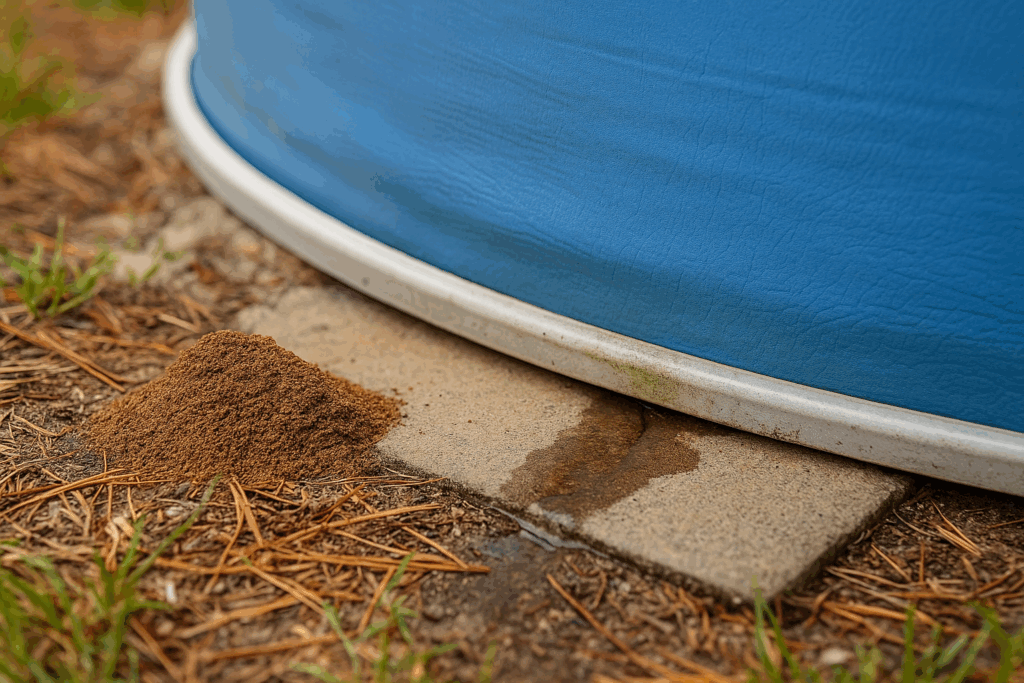
Even if you can’t see a hole in the liner, check the ground surrounding your pool. Consistently damp areas or visible mud trails can signal where water is escaping below the surface. In above-ground pools, look near the bottom rail or wall seam.
🏰 5. Ant Mounds or Insect Trails Near the Pool
Active fire ant mounds within a few feet of your pool wall should raise an immediate red flag. Ants often build their colonies directly adjacent to a water source, and the visible mound may be only a fraction of the entire network running beneath your liner.
When you see any combination of these warning signs, it’s best to schedule a professional swimming pool leak detection visit before attempting a repair. Specialists like Aquatrace Swimming Pool Leak Detection can isolate the leak, verify whether insect tunneling is the cause, and recommend a long-term fix rather than a temporary patch.
🔍 Step-by-Step Guide to Detect and Confirm a Leak
When your pool starts losing water, it’s tempting to jump straight into patching what you think might be the problem. But guessing can waste time, materials, and often make the issue worse. Before applying a patch or adding chemicals, take a few simple steps to confirm whether the water loss is due to evaporation, fire ants, or another hidden cause.
🪣 1. Perform a Bucket Test
The bucket test is a quick and easy way to separate normal evaporation from an actual leak.
Fill a bucket with pool water and set it on the pool’s top step. This allows the constant temperature of the pool water to help maintain the water temperature in the bucket.
Mark both water levels with tape, pencil or a marker.
After 24 hours, compare the two.
If the pool’s water level drops more than the bucket’s, you’re losing water through a leak — not evaporation.
👀 2. Visually Inspect the Liner
Carefully scan the liner for small, dark specks or shiny pinpoints that may indicate a puncture. Look along seams, steps, and especially around the pool floor near soft or uneven areas. For above-ground pools, check the wall base where ants or insects are most active.
📎 How to Visually Inspect Your Vinyl Liner for Hidden Leaks
🎨 3. Conduct a Dye Test
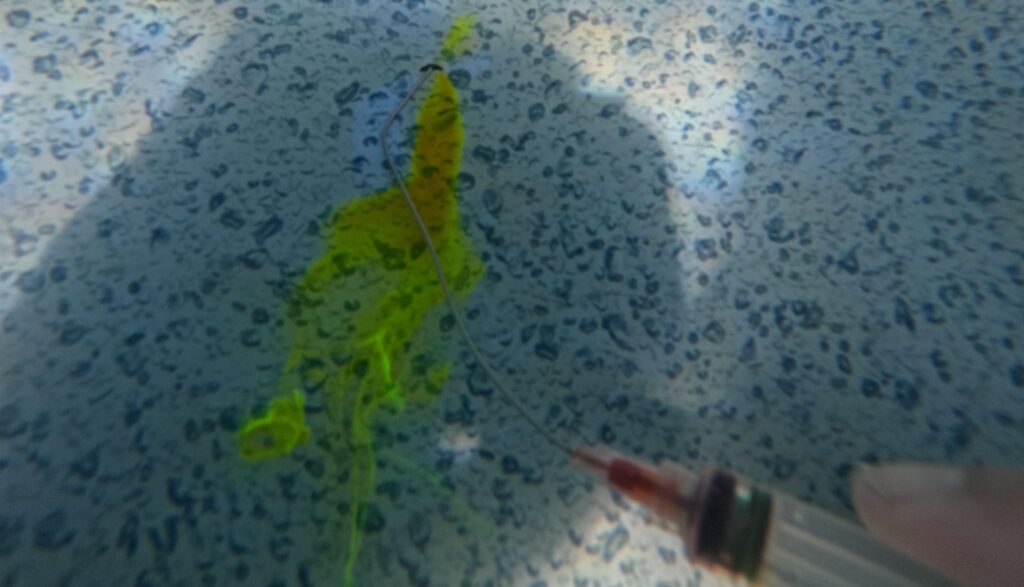
Once you’ve narrowed down the suspect area, turn off the pump and let the water settle. Using a leak detection dye or even food coloring, release a few drops near the suspected pinhole. If the color is drawn toward the liner, you’ve found your leak. This test works best in calm water and bright light conditions.
🎧 4. Listen for Leaks (If Equipment Is Suspect)
For in-ground pools or those with plumbing runs, small leaks can sometimes be heard with a mechanic’s stethoscope or electronic listening device. Professionals use hydrophones to pick up the distinct hiss or bubbling noise of escaping water. If you hear faint bubbling or static sounds near fittings or returns, that area deserves further inspection.
🐜 5. Check for Ant or Insect Activity
Walk around your pool perimeter. Look for mounds, soil cracks, or small piles of sand near the base — clear indicators of tunneling insects. Even if you can’t see the ants themselves, the soil movement gives them away.
👨🔧 Professional Leak Detection for Confirmation
If you’ve gone through these steps and still can’t pinpoint the problem, that’s when it’s time to bring in the pros. At Aquatrace Swimming Pool Leak Detection, our technicians use advanced tools such as:
Hydrophone listening systems to locate subsurface leaks through sound.
Pressure testing to isolate problem lines or fittings.
Ultrasonic inspection to identify pinholes and soft spots in liners with precision.
This level of testing eliminates the guesswork and ensures every hidden pinhole — even those caused by fire ants or shifting soil — is identified and documented before any repair is made.
Don’t be discouraged if you can’t find the leak yourself. Many of the smallest liner punctures are invisible without professional tools. The key is confirming a leak early before continued water loss weakens the soil and creates a full liner failure.
🛠️ Repairing and Preventing Pinholes in Vinyl Liners
Once you’ve confirmed a leak, the next step is deciding how to repair it — and how to keep it from coming back. The right solution depends on the size, location, and cause of the pinholes. Small leaks can often be patched, but underlying problems like insect tunneling or chemical imbalance require a more comprehensive fix.
1️⃣ Temporary Patches vs. Permanent Repairs 🩹
For minor pinholes, a vinyl patch kit can buy you time. These kits include an underwater adhesive and patch material that bonds to the liner, even without draining the pool. Cut a circular patch at least two inches larger than the hole, apply adhesive evenly, and press firmly while smoothing out air bubbles. Hold it in place for a few minutes until it seals.
While these patches can stop the immediate leak, they’re rarely a long-term solution. If ants or shifting soil caused the damage, the same issue will likely reappear elsewhere. Professional technicians use commercial-grade adhesives and patch materials matched to the liner thickness, ensuring a permanent bond that resists pressure and flexing.
2️⃣ Restore Proper Water Chemistry ⚗️💧
Many liner pinholes form because of imbalanced water chemistry. Excess chlorine, low pH, or improper calcium hardness levels can dry out or embrittle the vinyl, making it more prone to cracking. Keep your chlorine between 1–3 ppm, pH between 7.2–7.6, and total alkalinity around 100 ppm to extend liner life.
Regularly testing and balancing your pool water prevents chemical deterioration and helps patch materials adhere more effectively.
3️⃣ Reduce Pest and Ant Activity Around the Pool 🐜🚫
Since fire ants and ground insects are often behind the damage, it’s essential to treat the surrounding soil. Use ant-safe, pool-friendly control products or have a pest control company treat the perimeter with non-toxic barrier granules. Avoid using harsh insecticides that could leach into the pool water or harm vinyl.
Maintaining a clear, dry perimeter around your pool — and removing piles of mulch, leaf litter, or debris — discourages ants from nesting nearby.
4️⃣ Inspect and Replace Worn Pool Cleaning Equipment 🧹⚠️
As mentioned earlier, cleaning tools can cause liner damage too. Inspect vacuum heads, wall brushes, and skimmer nets for cracked edges, exposed metal, or sharp corners that could scratch the vinyl surface. Replace worn tools immediately, and consider investing in equipment specifically designed for vinyl liner pools.
📎 Pool Cleaning Equipment Inspection Guide
5️⃣ Schedule Routine Professional Leak Inspections 🔍👨🔧
Even when everything looks fine, small leaks can still develop over time. A yearly leak detection inspection by Aquatrace Swimming Pool Leak Detection can catch early warning signs before they become costly. Professional inspections also help verify that ant activity or ground settling hasn’t caused new weak spots beneath your liner.
Preventing leaks isn’t just about saving water — it’s about preserving your pool’s structure and longevity. By combining proper maintenance, pest control, and regular inspections, you can protect your investment for years to come.
When to Call a Professional Leak Detection Specialist
🚨 Signs You Need Vinyl Liner Leak Detection
If your pool keeps losing water and you can’t find the source, it’s time to stop guessing and bring in a professional. While DIY methods can confirm that a leak exists, only a qualified leak detection specialist has the tools and experience to pinpoint exactly where it’s coming from — especially when the problem is buried beneath the liner or caused by insect tunneling.
Even the tiniest leak can cause big trouble over time. A few unnoticed pinholes may not seem urgent, but as water escapes, it washes away the supporting soil beneath your pool. This can lead to liner sagging, uneven walls, and in extreme cases, complete structural washouts — a nightmare for any above-ground pool owner. Once soil erosion starts, the liner can stretch and tear beyond repair.
🧰 Why Professional Vinyl Liner Leak Detection Matters
Professional swimming pool leak detection technicians use advanced listening equipment, dye tracing, and pressure testing to locate leaks with pinpoint accuracy. At Aquatrace Swimming Pool Leak Detection, our process typically not only finds the leak — but can often times identify the cause. Whether it’s insect activity, a brittle liner, or damaged equipment, we document the issue and recommend the most effective repair option to prevent recurrence.
Calling in a professional early can also save you money. What might seem like a minor drip today could cost you hundreds of dollars in wasted water and chemicals — or thousands in liner replacement and structural repair later. It’s far better to confirm and fix the problem now than to wait for visible damage to appear.
If you notice repeated soft spots, unexplained water loss, or ant mounds forming near your pool, consider that your sign to schedule a professional inspection. A trained leak detection specialist can confirm whether the issue is insect-related or due to other hidden factors and ensure your pool remains safe, stable, and watertight.
Protect Your Pool Before Small Leaks Become Big Problems
💧 Why Small Vinyl Liner Leaks Become Big Issues
Tiny pinholes in a vinyl liner might seem like no big deal, but they can quickly add up to thousands of gallons of lost water — and major headaches for pool owners. Whether the damage comes from age, chemical imbalance, or fire ants tunneling beneath your pool, every small leak weakens your liner and shortens its lifespan.
What’s tricky is that these issues rarely announce themselves. Most pools with insect-related leaks show only subtle signs — soft spots, slow water loss, or mysterious bubbles under the liner. By the time you can see the damage, the soil beneath your pool may already be compromised. That’s why early detection and proper repair are so important.
🛠️ Vinyl Liner Leak Detection That Protects Your Pool
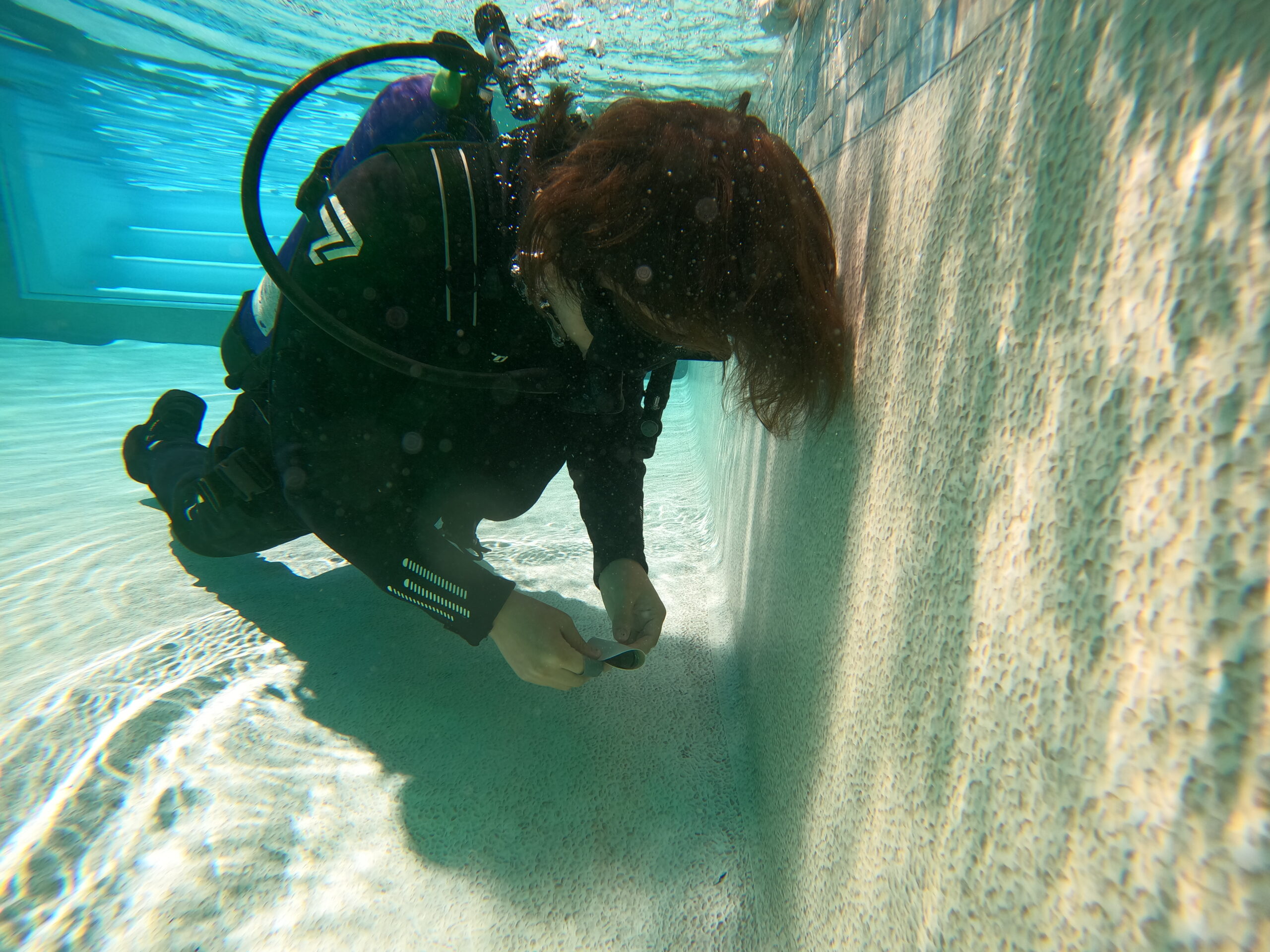
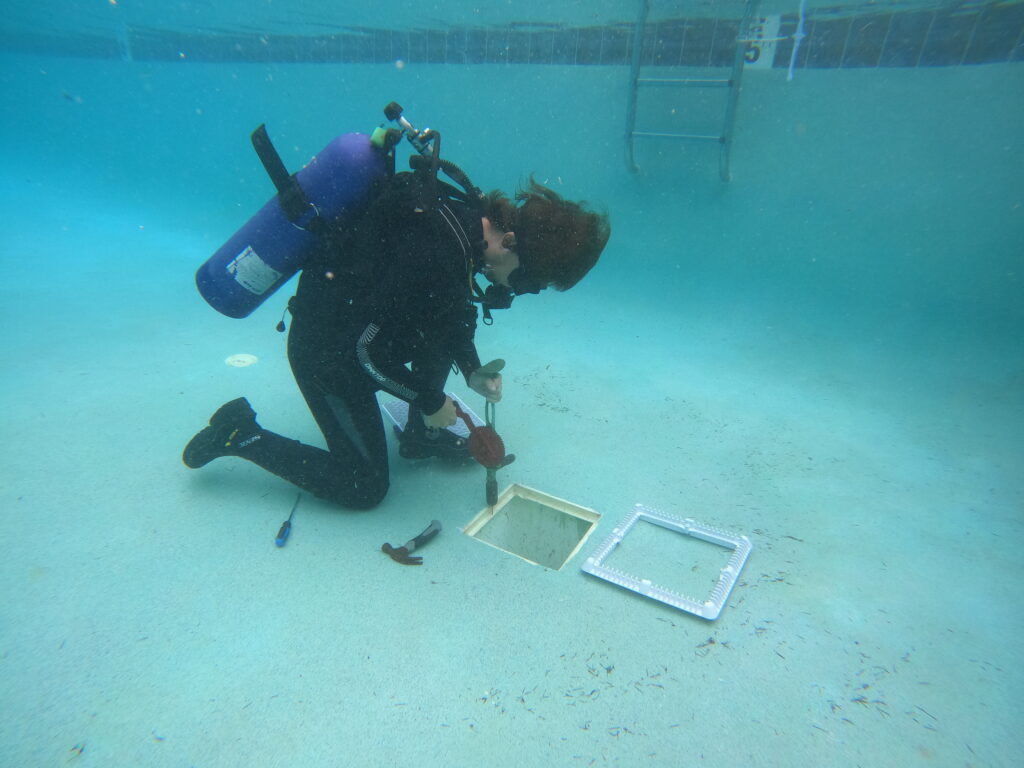
If you’ve noticed even the slightest, unexplained drop in your pool’s water level — or suspect ants may be to blame — don’t wait for the situation to worsen. Aquatrace Swimming Pool Leak Detection specializes in finding and fixing even the smallest leaks before they cause costly liner or structural damage. Our technicians use a combination of hydrophone listening systems, dye tracing, scuba diving inspections, underwater cameras, and visual sub-surface assessments to locate and confirm leaks with precision. This ensures every hidden problem is verified before any repair begins, saving you time, money, and unnecessary guesswork.
🔍 Fast, Accurate Detection Prevents Costly Damage
Don’t let pinholes drain your summer. 🌞💧
Reach out to Aquatrace Swimming Pool Leak Detection today to schedule a professional inspection and keep your pool safe, efficient, and ready for relaxation. 📞🔍
📞 Call Us Now to Schedule your Leak Detection Service!
Yes. Even small pinholes can lead to hundreds or thousands of gallons of water loss over time. If left untreated, they can weaken the soil under your pool and lead to structural damage, wrinkles, and costly liner replacement.
Common causes include insects like fire ants, liner age, poor water chemistry, cleaning tools with sharp edges, ground movement, and debris trapped under the liner.
Signs include soft or spongy liner spots, small air bubbles under the liner, unexplained water loss, damp soil along the pool base, or ant mounds forming close to the pool wall.
In some cases, yes — small leaks can be patched with an underwater vinyl repair kit. But if ants or shifting soil caused the damage, get a professional inspection to prevent repeat leaks and ensure a long-lasting repair.
If your pool loses more than ¼ inch of water per day, or soft spots appear under the liner, schedule a professional swimming pool leak detection service right away.