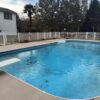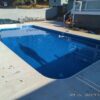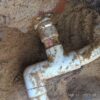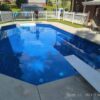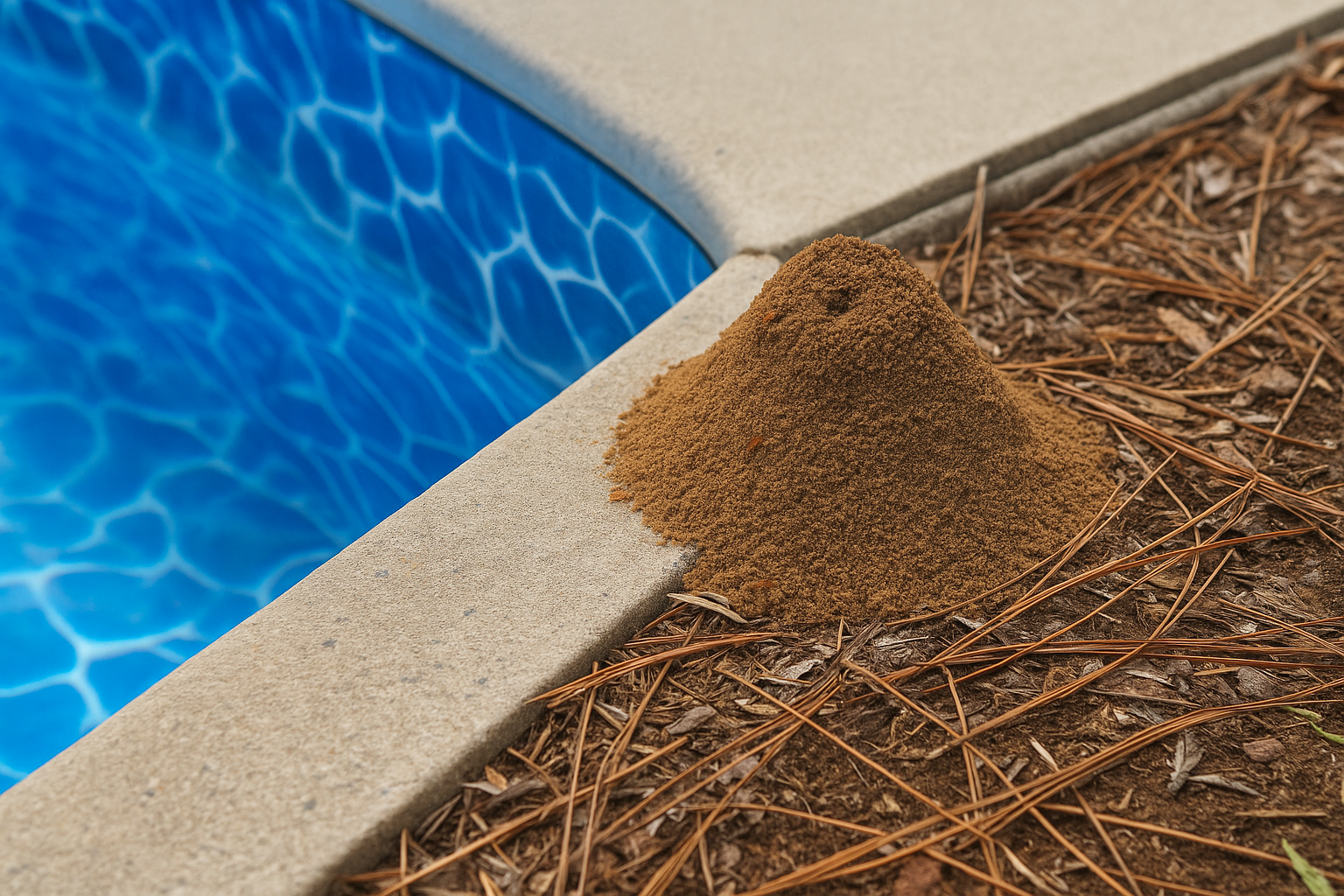





If your pool is losing water, one of the first things you can do on your own — before spending money on a professional visit — is a simple observation test: run your pool for 24 hours with the pump on, mark the water level, then run it for 24 hours with the pump off and mark the level again. Many pool owners work through this test themselves after a quick conversation with us, and the results can tell you a great deal about where to focus your attention.
This is often called the pump-on/pump-off test. It doesn’t find the leak — but it can help narrow the search to one of three general areas of the pool. That’s useful because the diagnostic steps, tools, and repair costs can differ significantly depending on which side of the system is involved.
A few important things to know before you start: this test is not always conclusive, it can be influenced by evaporation, rain, splash-out, and auto-fill systems, and the results should be treated as a starting point rather than a definitive diagnosis. With that said, here’s what the results often suggest.
What the Pump-On/Pump-Off Test Actually Tells You
Your pool’s plumbing works in two directions. The suction side pulls water from the pool — through the skimmer and main drain — into the pump. The pressure side pushes filtered water back to the pool through the return jets. These are two separate systems, and they behave very differently when they leak.
When you run the pump, the pressure side is active and under positive pressure. The suction side is under negative pressure — it’s pulling rather than pushing. When you turn the pump off, both sides go passive. Understanding this is the key to reading the test results.
If Your Pool Loses More Water With the Pump Running
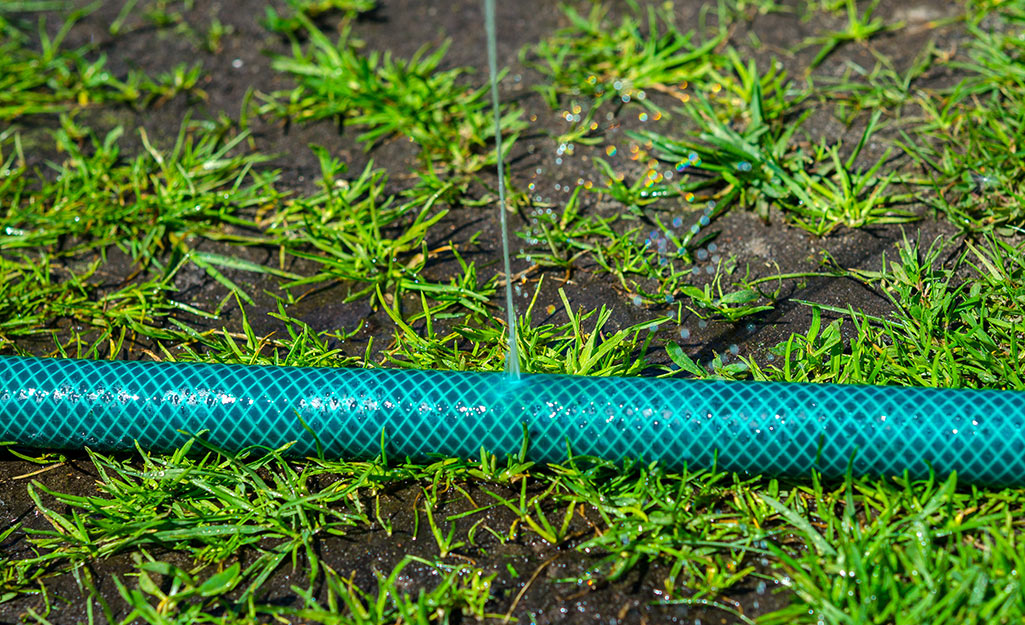
This pattern often suggests a pressure-side leak. When the pump is running, water is being actively pushed through the return lines at positive pressure. Think of it like a garden hose with a pinhole or two — when the water is flowing, those small holes push water out steadily. Stop the flow, and the leaking slows or stops. A crack, failed fitting, or compromised joint in pressurized return plumbing behaves the same way.
Common pressure-side leak locations include:
- Underground return lines between the equipment pad and the pool wall
- Return jet fittings where the pipe penetrates the pool shell
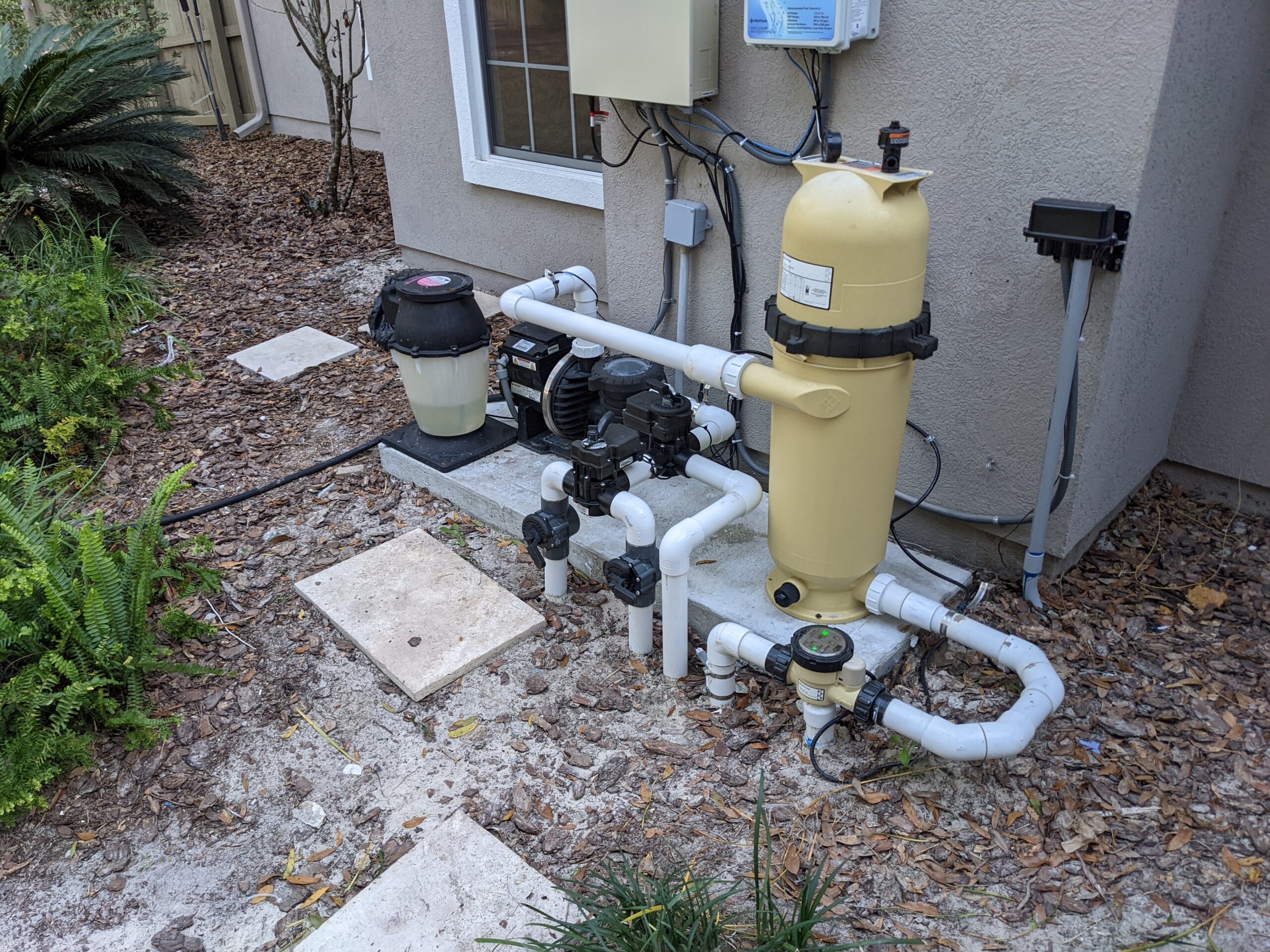
- Unions, valves, or connections at the equipment pad
- The filter, heater, or chlorinator body if cracked or poorly sealed
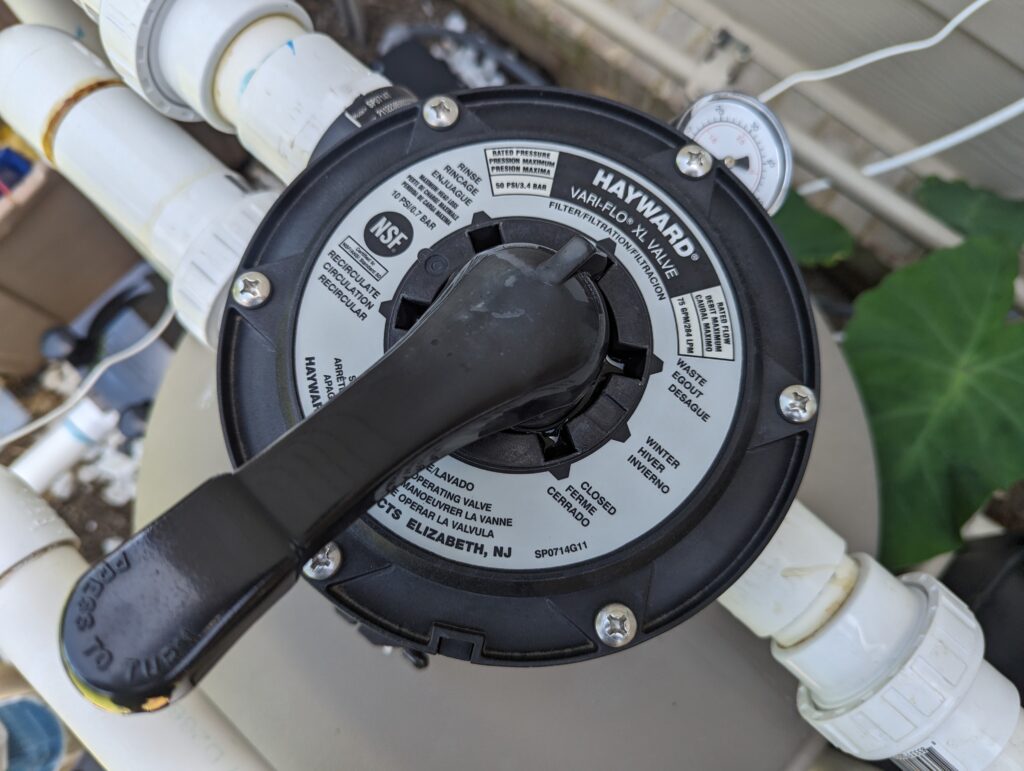
- The multiport or backwash valve body or its internal gasket — a worn or cracked backwash valve can push water out through the waste line while the pump is running, sometimes without any obvious visible sign at the equipment pad
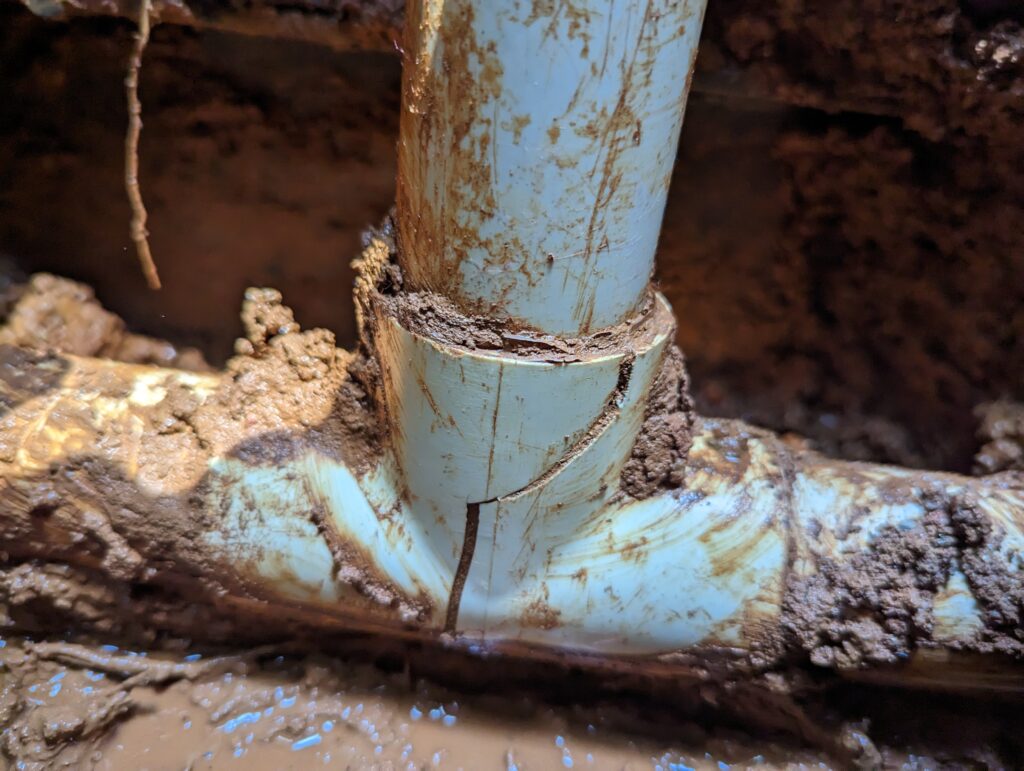
Pressure-side leaks tend to be among the more aggressive water losers. A pinhole in a pressurized return line can push out a significant amount of water per day, and because most of this plumbing runs underground, there is often no visible wet spot to trace it to.
If Your Pool Loses More Water With the Pump Off
This result surprises most pool owners, but it has a straightforward explanation. Think of a cracked straw in a drink at a restaurant. While you’re pulling on it, suction holds the liquid in place and you may not notice the crack. The moment you stop pulling — the liquid drains right out through the break.

The suction side of your pool plumbing works the same way. When the pump is running, negative pressure holds water in the line. When the pump shuts off, water drains freely through any crack or failed joint by gravity.
Common suction-side leak locations include:
- The skimmer throat — the connection point between the plastic skimmer body and the pool shell
- The skimmer suction line running underground from the skimmer to the pump
- The main drain line running along the pool floor to the equipment pad
- Equalizer lines in older pools connecting the main drain to the skimmer underside
A suction-side leak will often show a secondary symptom: air getting into the pump basket or visible air bubbles coming out of the return jets while the pump is running. This happens because the cracked suction line is pulling in air through the same gap it’s losing water through.
If Your Pool Loses the Same Amount of Water Either Way
When water loss is consistent regardless of whether the pump is running, the leak is most likely structural — in the pool shell itself or at a fitting that’s below the waterline and independent of the plumbing system.
Common non-plumbing leak locations include:
- Cracks in the pool shell, floor, or wall
- The light niche housing or the conduit connection at the back of the niche
- Return jet fittings or main drain covers leaking at the pool shell rather than in the underground pipe
- Tile line separations in concrete or gunite pools
- Skimmer mouth gaps where the skimmer meets the pool wall
Where Does the Water Level Stop — and What It May or May Not Mean
After running the pump-on/pump-off test, some pool owners also observe where the water level stabilizes when they stop adding water. This can offer additional clues, but it requires careful interpretation.
- Water stopping near the bottom of the skimmer opening often points toward the skimmer area — but not always at the skimmer itself
- Water stopping near the bottom of the return jets may suggest a return fitting or line issue in that vicinity
However — and this is important — where the water stops is not always where the leak is. Water can travel behind the pool shell, through the soil, or along plumbing pathways before it exits, which means the water level can equalize at a point that has nothing to do with the actual leak location. Additionally, debris, sediment, or mineral buildup can temporarily plug a small leak hole, slowing or stopping water loss until the plug dislodges. This is one of several reasons why the pump-on/pump-off test and water level stabilization alone are not sufficient to confirm or locate a leak — they are directional clues, not a diagnosis.
What This Test Doesn’t Tell You
The pump-on/pump-off test is a triage tool, not a diagnosis. Even when the results point clearly in one direction, there are scenarios where the test can mislead:
- Evaporation, splash-out, rain, and auto-fill systems can all distort the results if not accounted for
- A pool can have leaks on both sides simultaneously, making the results appear inconclusive
- Ground saturation near a long-running leak can slow apparent water loss and make the test harder to read
- Debris blocking a crack can make a leaking pool appear to stop losing water at a certain level
Finding the actual leak location requires pressure testing the suspect plumbing lines, dye testing around fittings and penetrations, acoustic listening equipment to detect the sound of escaping water underground, and in some cases pipe camera inspection or SCUBA-assisted underwater survey. These are not DIY tools — they require specialized equipment and training to use accurately.
A Note on Plumbing That Shares Lines
Most residential pools do not run a separate pipe from each skimmer and each return jet back to the equipment pad. The plumbing tees underground — one pipe feeds two or three return jets, for example. This means that when a pressure test fails on a return line, you’ve confirmed there’s a leak on that line — but you can typically only locate one leak at a time. If the primary leak is repaired and water loss continues, a secondary leak may be present further along the same line.
This is not uncommon and is not a sign that the first detection was wrong. It simply reflects how pools are plumbed.
When to Call a Professional
If you’ve run the pump-on/pump-off test and you’re seeing meaningful water loss in either scenario — or the results are unclear — it may be time for professional leak detection. A trained technician can pressure test suspect lines, perform dye testing around fittings and penetrations, and use hydrophone acoustic equipment to listen for escaping water underground.
At Aquatrace, we serve residential and commercial pools across Fair Play, SC, Gainesville, FL, Myrtle Beach, SC, and surrounding service areas throughout the Carolinas, Georgia, and Florida. If you’ve already worked through the pump test and need the next step, we can help.
Frequently Asked Questions
Faster water loss with the pump running often suggests a pressure-side leak — a crack or failed fitting in the return plumbing being pushed open by positive water pressure. Think of a garden hose with a pinhole: water pushes out under pressure but slows when the flow stops. Common locations include underground return lines, return jet fittings, equipment pad connections, and the backwash valve body or gasket. Professional pressure testing is the most reliable way to confirm and locate the source.
Faster water loss when the pump is off often points toward a suction-side leak. Think of a cracked straw in a drink — while you’re pulling, suction holds liquid in place, but the moment you stop, it drains right out. Your pool’s suction plumbing works the same way. When the pump runs, negative pressure holds water in the line. When it shuts off, water drains freely through any crack or gap by gravity. Common areas include the skimmer throat, the skimmer suction line, and the main drain line. Air bubbles in the pump basket while running are a secondary sign.
Equal water loss in both conditions often suggests a structural leak — in the pool shell, at a light niche, around a main drain cover, at the skimmer mouth, or at a fitting below the waterline that is independent of the plumbing system. Dye testing, underwater visual inspection, and SCUBA-assisted survey are typically used to locate these leaks.
Not necessarily. Where the water level stabilizes is a clue, not a confirmed location. Water can travel behind the pool shell, through surrounding soil, or along plumbing pathways before it exits — meaning it may equalize at a level that has nothing to do with where the actual leak is. Additionally, debris or mineral buildup can temporarily plug a small leak hole and slow or stop water loss until it dislodges. Always treat water level stabilization as one data point among several, not as a definitive answer.
No. The pump-on/pump-off test is a useful starting point but is not always conclusive. Evaporation, splash-out, rain, and auto-fill systems can distort the results. A pool can have leaks on both sides of the system simultaneously, making the results harder to interpret. Ground saturation from a long-running leak can also slow apparent water loss and muddy the picture. The test is best used as a directional clue to guide a professional inspection, not as a standalone diagnosis.
Call a professional when your pool consistently loses more than 1/4 inch of water per day beyond what the bucket test shows as evaporation, when the pump-on/pump-off test points clearly to one side of the system but you cannot identify a visible source, or when the results are inconclusive after running both tests. Professional leak detection uses pressure testing, acoustic hydrophone equipment, and dye testing to confirm the actual leak location before any repairs are made.